Practice Guide
The Complete Guide to Nurse Practitioner Private Practice
Building a sustainable, independent NP practice requires more than clinical skill. It requires understanding Full Practice Authority, navigating insurance reimbursement, acquiring patients, and presenting yourself professionally online.
Last updated: May 2026 | 8 min read
1. The FPA Landscape: Where You Can Practice Independently
As of 2026, 28 U.S. states plus Washington, D.C. grant Full Practice Authority (FPA) to nurse practitioners. This means you can legally evaluate patients, diagnose, prescribe, and operate a solo clinic under your own license—without a paid lifetime collaborative agreement with a supervising physician.
FPA States (28 + D.C.):
Alaska, Arizona, Colorado, Connecticut, Delaware, Hawaii, Idaho, Iowa, Kansas, Maine, Maryland, Massachusetts, Minnesota, Montana, Nebraska, Nevada, New Hampshire, New Mexico, New York, North Dakota, Oregon, Rhode Island, South Dakota, Utah, Vermont, Washington, Wyoming — plus Washington, D.C.
The remaining 22 states fall into two categories: Reduced Practice (12 states with limited autonomy) and Restricted Practice(11 states requiring physician oversight). If you're practicing in a restricted state, understand your collaborative agreement requirements before marketing independent practice.
Key insight:Your website should clearly address your state's regulatory environment. A Connecticut NP and a Texas NP need different messaging around independence and scope.
2. Legal Foundations for Your Independent Practice
Before opening doors, you need: business registration, licensure verification, DEA registration, CLIA certification (if doing lab work), and state-specific collaborative practice agreements (if applicable). Your website is often a prospect's first legal impression of your practice.
- Business entity (LLC, S-corp, C-corp) with EIN from IRS
- State professional license in active status
- DEA registration for prescribing authority
- NPI (National Provider Identifier) for insurance credentialing
- Malpractice insurance ($1M–$2M recommended)
- HIPAA compliance infrastructure (encrypted patient data, secure forms, BAA with hosting)
- Collaborative agreement (if required by your state)
Your website should signal professionalism and compliance: active licenses, board certification, malpractice insurance, and a secure patient intake process. Patients Google before calling; a dated or unprofessional site creates doubt.
3. Insurance Billing & Reimbursement Strategy
NPs face a reimbursement disparity: Medicare typically reimburses NP services at 85% of the physician rate for identical procedures. This is a structural headwind that affects your practice economics.
Strategy considerations:
- Insurance credentialing: Get in-network with major payers. Expect 3–6 month credentialing lag.
- Claim routing: NP claims require specific taxonomy codes and billing modifiers. Miscoding tanks reimbursement.
- Direct Primary Care (DPC) hybrid: $50–150/month retainer + fee-for-service for complex visits. Reduces insurance dependency.
- Cash-pay specialties: Telepsychiatry, med spas, wellness, and cosmetic NP services often have higher cash margins.
Your website should address insurance credentialing clearly: "Accepting [list of insurances]" builds trust with insurance-dependent patients. If you're cash-pay or DPC, state that upfront—no surprises.
4. Patient Acquisition: Online Presence & Credibility
NPs in independent practice face a credibility gap: 61% of patients prefer physicians if given the choice. Your website and online presence bridge that gap.
Acquisition levers:
- Google Business Profile: 73% of healthcare seekers start on Google. Optimize for "[your specialty] near me".
- Insurance directories: Patients verify insurance acceptance via Cigna, UnitedHealth, Aetna directories—get in-network first.
- Referral networks: Local physicians, RNs, and social workers refer. Your site should make referral intake friction-free.
- Direct online booking: 38% of patients book appointments online if available. No phone call required.
- Educational content: Blog posts, FAQs, and guides establish authority and improve SEO.
Credibility signals matter: Show your board certifications, state licenses, years of experience, patient testimonials, and professional affiliations prominently. Patients need reassurance—especially when choosing an NP over an MD.
5. Your Website: The Credibility Foundation
Your website is where patients decide whether to book or bounce. Non-negotiable elements:
- Bio + credentials: Photo, full bio, education, certifications, licenses, specializations.
- Insurance & payment: Clear list of accepted insurances, copay estimates, cash-pay pricing (if applicable).
- Online booking: Integrate Acuity, Calendly, or SimplePractice. No friction. (BAA considerations →)
- HIPAA-compliant intake: Secure forms for health history, consent, and insurance.
- Telehealth integration: If offering virtual care, make it obvious and easy to access.
- Reviews & testimonials: Real patient stories build trust. Encourage Google and Healthgrades reviews.
- Mobile-responsive design: 70% of healthcare searches happen on mobile. Your site must be fast and readable on phones.
6. Specialty Deep Dive: Psychiatric NPs & Telepsychiatry
Psychiatric NPs (PMHNPs) represent the fastest-growing NP specialty. Telepsychiatry demand is explosive: 80% of psychiatry practices now offer virtual-first or hybrid models.
Why telepsychiatry for NPs works:
- Eliminates geography: serve patients across FPA states without physical overhead.
- High margins: medication management visits are 15–20 min, reimbursable at $80–150.
- Less credibility friction: patients seek NPs for psychiatric meds as readily as MDs (different from primary care).
- Insurance-friendly: most major payers reimburse telepsychiatry at parity (100% vs. 85%).
Your website should emphasize: availability, breadth of conditions treated, medication management approach, session frequency, and prescription process. Psychiatric patients are often shopping across multiple providers.
7. The Direct Primary Care (DPC) Alternative
DPC bypasses insurance complexity. Patients pay a monthly retainer ($50–150/mo) for unlimited primary care visits, messaging, and preventive care. You bill insurance or accept cash for procedures and labs.
DPC appeal for family NPs: Predictable revenue, longer appointment slots (30–45 min vs. 15 min for insurance), stronger patient relationships, and zero insurance billing friction.
Example model: 150 DPC members at $100/mo = $15K/mo recurring revenue. Add fee-for-service exams, labs, and procedures for additional income. Insurance complexity vanishes.
Your website needs to explain DPC clearly: monthly cost, what's included, how billing works, and why a patient might choose it over insurance-only.
8. Differentiating Yourself: NP vs. PA vs. MD
Patients often conflate NPs, PAs, and MDs. Your website should clarify differences—not in a defensive way, but in a way that shows expertise and builds confidence.
Your messaging: "Board-certified psychiatric NP with 8 years clinical experience" is stronger than defensive comparisons. Lead with credentials and specialization.
Example Sites
NP practice website examples
Each example below reflects a distinct NP specialty or NP-owned business type. Live sites ship to real patients; template examples show what the build looks like before content is swapped in.

Psychiatric Mental Health NP
LiveSunshine Psychiatry Consult
Psychiatric nurse practitioner solo telehealth practice serving Florida and Nevada. Brochure site with embedded Grow Therapy booking and provider bio.
Visit the live site →
Psychiatric Mental Health NP
Horizon Psychiatry Care
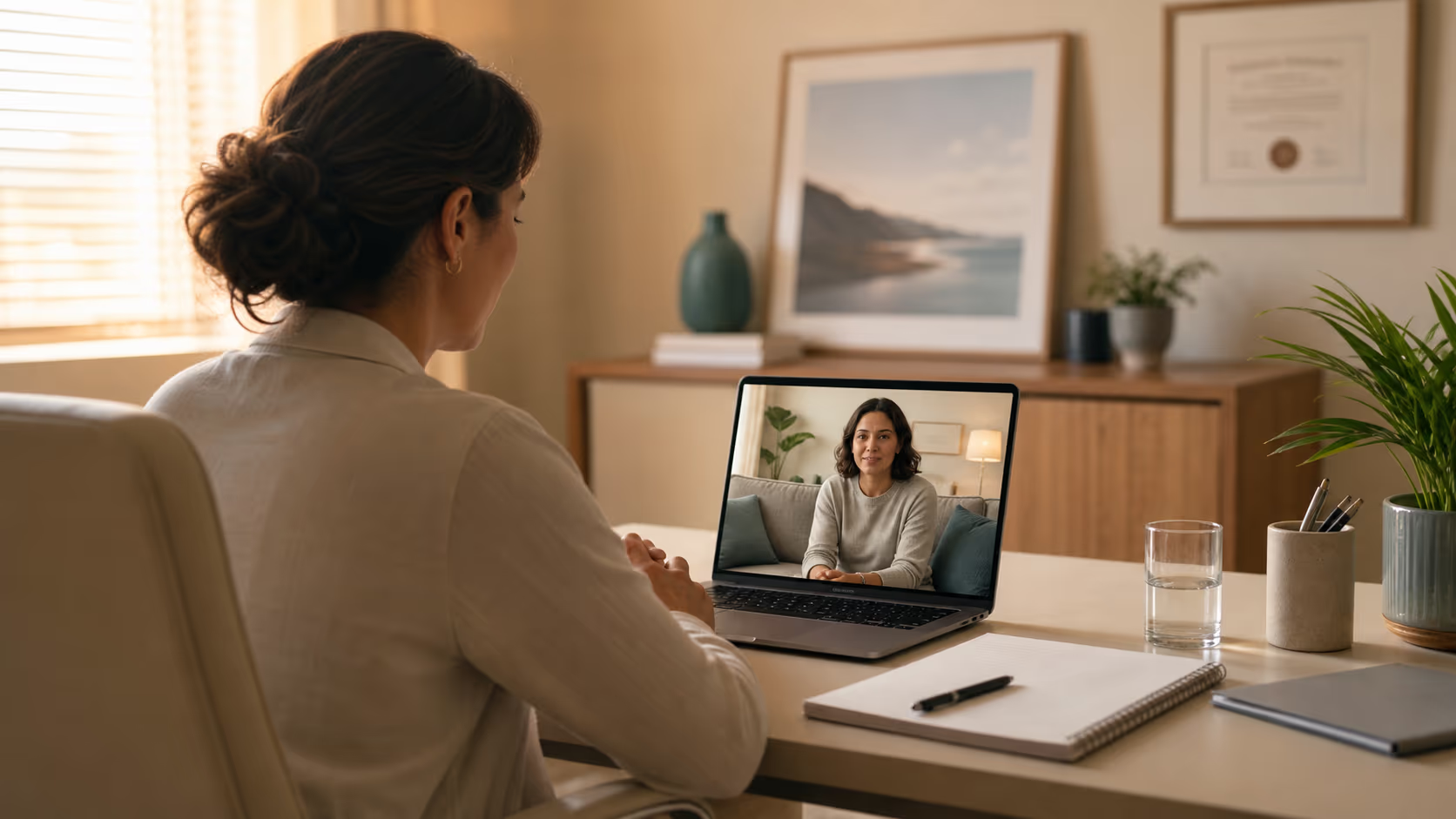
Psychiatric nurse practitioner telehealth example with third-party booking, state licensure checks, crisis-safe copy, fees and insurance, and a trust-building clinician bio section.
Psychiatric NP sites need to answer access, scope, and trust faster than most healthcare pages. Patients want to know whether the provider treats their concern, whether they can be seen in their state, and whether medication decisions will be careful.
This example uses a warm provider-side telehealth hero while adding operational detail: state licensure checks, crisis guidance, booking flow, insurance/self-pay clarity, provider credentials, and condition-specific service cards.
See the example →

Family Nurse Practitioner
Desert Bloom Family Care
Family Nurse Practitioner-owned independent primary care clinic serving patients across the lifespan — pediatric well visits through adult chronic-disease management.
Family practice means one familiar provider caring for the whole household — newborn well visits, school physicals, adult chronic disease, all under one roof. That continuity is the value proposition; the site needs to communicate it.
Patient journey: a parent searches for "family doctor near me," lands on the home page, scans for the age band they need (their kid, themselves, an aging parent), and either books an annual visit or fills out a new-patient form. The site does the first conversation for the practice.
The differentiator versus a corporate primary-care clinic is continuity and time — the NP knows the whole family's history, recognizes patterns across visits, and isn't on a 12-minute clock. The site signals that by being calm, well-organized, and not running ads.
See the example →

Adult-Gerontology NP
Golden Years Wellness
Adult-Gerontology NP independent practice focused on healthy aging, chronic disease prevention, and complex medication management for adults 50 and over.
Adult-Gerontology practice serves the half of the population that primary care often rushes through — adults navigating midlife, retirement, and the medication complexity that comes with age. The site has to feel calm, trustworthy, and unhurried.
Patient journey: a 60-something patient or their adult child searches for an NP who'll actually listen, lands on the home page, finds the provider's credentials and Medicare-status answers within seconds, and books a comprehensive wellness visit or a medication review. The site does the trust-building so the first visit can be substance.
The differentiator is time, accessibility, and family-aware care planning. The site reflects that: large readable type, clear navigation, dedicated caregiver pages, and provider credentials presented prominently — not buried in an "About" tab.
See the example →

Pediatric Nurse Practitioner
Little Acorns Pediatrics
Pediatric Nurse Practitioner independent clinic offering well-child visits, sick care, developmental screening, and adolescent health in a kid-friendly setting.
Pediatric primary care from birth through 21. The site has to feel welcoming to both the kid and the parent making the decision — bright but not babyish, professional but not sterile.
Patient journey: a new parent searches for a pediatric provider, lands on a hero that visibly cares about kids, immediately finds vaccine information and new-patient forms, and either books a well-child visit or downloads what they need before the first call. Reduces phone-call load on the front desk by ~50%.
The differentiator is continuity (same NP, multiple visits across childhood) and accessibility (a real human you can reach, not a phone tree). The site signals that with provider photos, clear hours, and parent-facing self-service for the routine stuff.
See the example →

Women's Health NP
Wildflower Women's Health
Women's Health NP independent practice offering routine gynecologic care, contraception, prenatal care, and menopause support in a calm, unhurried setting.
Women's health practice serving patients across life stages — well-woman care, contraception, prenatal, perimenopause, menopause. The audience often arrives researching a specific sensitive issue, so the site has to be welcoming without forcing them to disclose details before they're ready.
Patient journey: a patient searches for an NP who handles their specific concern (contraception switch, fertility question, perimenopause), lands on a page organized by life stage, finds the relevant FAQ that addresses 80% of what they were going to ask on the phone, and books a visit directly.
The differentiator is time, privacy, and NP-led continuity — visits aren't 8 minutes with whoever was available. The site reflects this with service-specific FAQs (which most gynecology sites lack), discreet booking, and privacy-first analytics (no tracking pixels that follow patients to advertising platforms).
See the example →

Medical Spa
Oasis Aesthetics
NP-led medical spa offering Botox, fillers, microneedling, laser treatments, and skincare protocols. Per-service booking with transparent pricing and membership options.
MedSpa patients shop on outcomes, expertise, and price — usually in that order. They've researched on Reddit, Instagram, and competitor sites before they land here. The site's job is to close, not introduce.
Patient journey: a patient researching Botox in their area lands on a Treatments page, sees transparent per-unit pricing, scrolls a before/after gallery, watches a 30-second injector technique clip, and books the specific service directly — no generic "consultation request" that triggers a sales call.
The differentiator is NP credentials and ethical aesthetic — restraint over volume, subtle results over influencer faces. The site reflects that with a luxe-minimalist palette, treatment pages that name the brand and dose, and a gallery curated around "natural-looking" outcomes rather than maxed-out trend results.
See the example →

Holistic Health Clinic
Sage & Stone Wellness
NP-led holistic health clinic blending conventional medicine with complementary therapies, nutrition, and mind-body practices. Memberships and workshop programs available.
Holistic practices win on philosophy and community more than transactional booking. The visitor is choosing a way of relating to their health, not just a clinic. The site has to communicate the WHY (integrative care, time per visit, multiple modalities) alongside the WHAT (services + booking).
Patient journey: a patient frustrated with conventional medicine's pace or who's interested in complementary modalities lands on the philosophy page, reads about the integrative approach, scans the modality directory to find what resonates (nutrition, mind-body, herbal, acupuncture), browses upcoming workshops, and joins as a member or books a consult.
The differentiator is the bundle — multiple modalities under one practice, philosophy-led care, and community programming. Most of these signals don't fit cleanly into a standard medical site template, which is why holistic practices end up on cookie-cutter wellness templates that don't really work for them.
See the example →

Men's Health Clinic
Vitality Men's Clinic
NP-led men's health clinic focused on testosterone optimization, sexual health, weight, and longevity-oriented preventive care. Telehealth-first with optional in-person labs.
Men's health clinics serve a patient who evaluates care offerings differently than other categories — they want directness, results-focused framing, transparent pricing, and minimal friction. They've usually been to a primary care provider who dismissed their fatigue or libido concerns; they're looking for someone who'll take the work seriously.
Patient journey: a man between 30 and 60 searching for testosterone treatment or weight optimization lands on a condition page, reads a clear-eyed explanation of how labs and treatment work, sees per-program pricing without a sales-call gate, and books a telehealth intake with labs ordered to a local LabCorp or Quest.
The differentiator is professionalism without the alpha-bro marketing aesthetic that dominates this category. Most men's health sites either lean too hard on "unlock your inner warrior" copy or too institutional. The site reflects clinical credibility (provider credentials, lab transparency, real medicine) in a confident but not chest-beating voice.
See the example →
Planned Examples
More NP specialties for future examples
These NP specialty practices are on the roadmap. Each will get a dedicated template example covering the specialty's patient journey, required site sections, and copy patterns.
- —Acute Care NP (AC-NP) — Manages high-acuity inpatient and ICU patients, bridging the gap between bedside nursing and physician-level hospital medicine.
- —Neonatal NP (NNP) — Provides advanced care for premature and critically ill newborns in NICU settings, often serving as the primary provider on overnight and weekend shifts.
- —Emergency NP (ENP) — Evaluates and treats undifferentiated urgent and emergent presentations across all age groups, frequently running fast-track and independent pods within EDs.
- —Oncology NP — Manages chemotherapy protocols, symptom control, and survivorship care for cancer patients in both outpatient infusion and inpatient oncology settings.
- —Cardiology NP — Follows chronic heart failure, arrhythmia, and post-procedure patients in cardiology clinics, coordinating device management and medication titration.
- —Dermatology NP — Diagnoses and treats medical skin conditions, performs biopsies and minor procedures, and manages chronic conditions like psoriasis and eczema in outpatient dermatology.
- —Hospitalist NP — Manages general inpatient admissions, transitions of care, and discharge planning across medical-surgical units, often functioning as a rounding provider for assigned patient panels.
- —Endocrinology NP — Manages diabetes, thyroid disorders, adrenal conditions, and complex metabolic disease in specialty clinic settings, often owning a longitudinal patient panel.
- —Critical Care NP — Provides intensive care management for mechanically ventilated and hemodynamically unstable patients, typically embedded in surgical or medical ICUs.
- —School Health NP — Delivers primary care, chronic disease management, and preventive services to K-12 students, serving as the clinical provider within a school district's health program.
- —Occupational Health NP — Manages work-related injuries, conducts pre-employment physicals, and oversees employee wellness programs for corporate, industrial, and government employers.
Go Deeper: Related Topics
This guide covers the essentials. For more detailed exploration of specific areas, see:
- • Full Practice Authority by State
- • Insurance Credentialing: Step-by-Step Process
- • EHR & Practice Management for Solo NPs
- • Patient Acquisition & Local SEO
- • Telepsychiatry Compliance & Setup
- • DPC Economics: Build a Subscription Practice
Ready to Build Your Online Presence?
Your website is your credibility foundation. We help solo NPs build professional, compliant sites that convert patients and showcase your expertise.
See pricing →